
The public is well aware of the rampant digital media obsession that has grown over the last decade. We all know we spend too much time on this app or that app and on our devices in general. However, we never take the time to really understand how much time “too much” is. The attachment we have to our phones has caused the rise of Nophomobia, a fear of not being able to use your mobile phone or smart device. SecurEnvoy released the results of their research that concluded an astounding 66% of people in the UK have a form of Nophombia.
Recently I took a digital detox from my beloved Instagram app. In an experiment to see how addicted I truly am to the digital world, I had set aside five days where I would not participate in the world of the Gram. Instagram is my go-to social media getaway and, one-hundred percent, my number one time-waster. I knew it had to be the one to go since it is what I would miss the most. A new study done in June of 2018 states that Instagram users in the US spend an average of 53 minutes per day scrolling the app. This number has spiked just since last year.
Within the first minute of my detox, I had already realized the first sign of my addiction. In order to fully dedicate to my experiment, I decided I had to completely delete the app off of my phone. I could not trust myself to keep the widget in my sight. I would be too tempted to cheat. My willpower to resist the scroll was zero.
After deleting Instagram, I started to take a tally each day of how many times I would mindlessly pick up my phone and try to navigate to where the app used to live. Below, you can see the results.
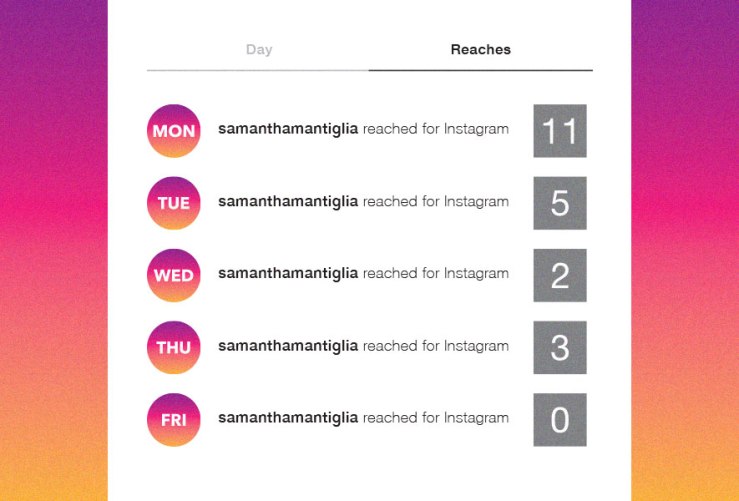
Honestly, these numbers were lower than I had anticipated going into this project. The first two days I did find myself going for my phone with intention of scrolling Instagram, but after a while, I remembered the app was no longer there. So, instead, I would go right to Snapchat, Facebook, Twitter, etcetera. If I were to do this experiment all over I would opt to get rid of all social media since I am unsure if it really led to less screen time.
While I did find my data lack-luster due to some experimental flaws, I did find other interesting moments worth sharing. Throughout the five-day period, I found myself with feelings of disconnection, craving, and lastly disappointment.
Instagram is so widely used that popular posts are often talked about between friends and peers. When I found myself unaware of what people were talking about during these points in time I felt out of the loop. The number of times this scenario occurred in a short five days made me wonder about how much society depends on the media for entertainment. Shouldn’t we be focusing our conversation on our own, real-life experiences? Generational studies have shown a shift, starting with iGen teens. Generations in the past may have been all for finding their independence, but not today’s teens. They prefer to spend their time at home and with their devices. This affects the social and emotional skills of these kids. Since research has shown that more screen time usually means a higher rate of distress and more in-person interaction leads to higher levels of happiness, we can conclude that something needs to change for the sake of the youth.
Along with feelings of disconnection, I also encountered many moments of withdrawal. When I was out with my friends or hanging out with my niece and nephew I felt the need to post an “Instagram story” about my experience. In turn, my feelings of desire left me feeling disappointed in myself. I didn’t understand why it mattered to me that I share these details with my online friends. These moments are not ones that need validating through an Instagram post. The science writer Winifred Gallagher may better explain these feelings. Gallagher made the connection of attention and human happiness. She has theorized that in order to create our own happiness we must choose to pay attention to the sweeter aspects of life. By giving focus to the negative we succumb. In my experience, I had moments of wishing I could share my activities online for others to see instead of being in the actual moment, which would have brought me more enjoyment overall.
My digital detox may have not presented itself with astounding numbers to present to the public, but it is something that had an impact on my personal emotions. I would suggest to anyone willing to give digital detoxing a try. Being able to see how we react without a certain app or device can be eye-opening. Do we want digital media to control our emotions and experiences? I assume all would answer no. So now is the time we assess what needs to change.

 Samantha Mantiglia